Snow Much Fun: Winter Adventures for Senior Pets – Snowy Paws Series
❄️ This article is part of the STARFLEET Petfleet Snowy Paws Series, a seasonal collection of tips and stories to help you and your pets stay active, comfortable, and connected through the colder months. Whether your companion loves the snow or prefers the blanket pile, there’s something here for every furry crewmate.
As the days grow shorter and the air turns crisp, many of us look forward to Winter adventures. The crunch of the snow underfoot, the sparkle of frost on the trees, and the quiet beauty and calm that come with the season. For those of us with active pets, Winter is also a time for joy-filled activities with our furry friends and senior pets.
November brings an important reminder: it’s Animal Geriatric Awareness Month in many veterinary clinics across North America. This means it’s the perfect time to reflect on the needs of our senior pets, especially if they’re joining us for winter sports. Aging animals can absolutely continue to enjoy outdoor fun, but they need extra care, thoughtful preparation, and a pace that matches their changing bodies.
The good news? With a few adjustments, you can make winter sports a safe, enriching experience for your older companion.
 [source: Wikipedia]
A cross-country skiing activity where your dog wears a special pulling harness attached to you via a bungee line. Your dog helps pull you forward as you ski, turning it into a team sport. For senior dogs, you can keep the pace gentle and focus on enjoying the glide together rather than racing.
[source: Wikipedia]
A cross-country skiing activity where your dog wears a special pulling harness attached to you via a bungee line. Your dog helps pull you forward as you ski, turning it into a team sport. For senior dogs, you can keep the pace gentle and focus on enjoying the glide together rather than racing.
 [source: Mondou’s “Outdoor sports to enjoy with your dog this winter” article]
Essentially running with your dog, but with a proper harness and hands-free waist belt. It’s a great winter option if the paths are packed and not too icy. For older pets, think of it as a light jog or brisk walk where they set the speed.
[source: Mondou’s “Outdoor sports to enjoy with your dog this winter” article]
Essentially running with your dog, but with a proper harness and hands-free waist belt. It’s a great winter option if the paths are packed and not too icy. For older pets, think of it as a light jog or brisk walk where they set the speed.
 [source: Fat-bikejoring outing in the Eastern Townships article]
Like skijoring, but with a mountain bike instead of skis. Your dog runs ahead in a pulling harness, connected to the bike via a shock-absorbing line. Works best on safe, snow-packed trails. For seniors, keep distances short and speeds low.
And yes, cats can get in on the action, too! Some will happily travel in a secure backpack carrier with a little viewing bubble, watching the world go by like they’re on their royal tour. Pair that with a calm winter walk or even a visit to a pet-friendly cabin, and you’ve got yourself a feline-approved outing.
Quirky bonus idea? Ice fishing with your pet! Dogs will enjoy sniffing around the frozen lake (on leash, of course), while many cats are surprisingly fascinated by the tiny fish and the movement under the ice.
And don’t forget about winter travel in general. Road trips or train rides to snowy towns can be a great way to break the routine, as long as your companion gets plenty of rest stops and cozy downtime. Whether it’s high-energy sports or slow, sniff-filled adventures, the cold season is full of ways to keep tails wagging and whiskers twitching.
Winter sports can be a source of joy, mental stimulation, and improved mobility for older pets, as long as we adapt the activities to their abilities.
Remember:
[source: Fat-bikejoring outing in the Eastern Townships article]
Like skijoring, but with a mountain bike instead of skis. Your dog runs ahead in a pulling harness, connected to the bike via a shock-absorbing line. Works best on safe, snow-packed trails. For seniors, keep distances short and speeds low.
And yes, cats can get in on the action, too! Some will happily travel in a secure backpack carrier with a little viewing bubble, watching the world go by like they’re on their royal tour. Pair that with a calm winter walk or even a visit to a pet-friendly cabin, and you’ve got yourself a feline-approved outing.
Quirky bonus idea? Ice fishing with your pet! Dogs will enjoy sniffing around the frozen lake (on leash, of course), while many cats are surprisingly fascinated by the tiny fish and the movement under the ice.
And don’t forget about winter travel in general. Road trips or train rides to snowy towns can be a great way to break the routine, as long as your companion gets plenty of rest stops and cozy downtime. Whether it’s high-energy sports or slow, sniff-filled adventures, the cold season is full of ways to keep tails wagging and whiskers twitching.
Winter sports can be a source of joy, mental stimulation, and improved mobility for older pets, as long as we adapt the activities to their abilities.
Remember:
So… what exactly is a “senior pet”?
Think of a senior pet as the wise old storyteller of your household, the one who’s been there, chewed that, and now naps in the sunny spot because they earned it. The Gandalf-the-Grey of the house. Officially, it’s an animal in the latter part of its life, showing little signs of aging and sometimes needing a bit of extra TLC. For dogs, “senior” is a moving target. Smaller breeds take their sweet time getting there, around 10 to 12 years, while giant breeds hit that milestone at a sprightly 5 years (sorry, big pet owners!). Most medium-sized dogs receive their AARP card around age 7. Bigger pups just live life faster, and that includes the calendar. For cats, the number hovers around 10 years old, but these little fur overlords often live into their late teens or even twenties (probably fueled by spite and sunbeams). Indoor cats usually clock more birthdays than their outdoor cousins, who face more daily hazards like cars, fights, diseases and pests. Signs your pet is entering their golden years? Maybe they’re slowing down a bit, struggling with stairs, taking longer naps, or giving you that “not today, human” look when you suggest a game of fetch. You know your pet best, so stay attuned to their habits, and you’ll know when they turn like grumpy ol’ pals. For PCC# 1597 Tiberius Tanguay, now 15 years old Siamese part of the USS Renaissance’s crew, arthritis set in at about 11 years old, and we could tell his demeanour changed in his steps and attitude. Vision and hearing may fade, their bathroom habits could change, and you may notice subtle changes in appetite or mood. They’ve traded puppy zoomies for senior swagger. And here’s the thing: even then, senior pets aren’t fragile antiques. They just need us to adjust the program. More comfort, more regular vet check-ins, a few tweaks to diet and exercise, and a whole lot of love. Do that, and your older buddy can still rock a snow trail, snuggle through an ice-fishing trip, or supervise a winter hike like the seasoned pro they are.Snowy-day sports and adventures to try
When it comes to winter fun, there’s way more to do with your pet than just the usual “walk around the block and hurry back in.” If your dog is game for a little adventure, you can try skijoring, canicross, bikejoring, and more. And of course, for a gentler day, nothing beats a winter hike through a quiet forest, where every new scent and crunch underfoot is pure enrichment for your pet.Skijoring
 [source: Wikipedia]
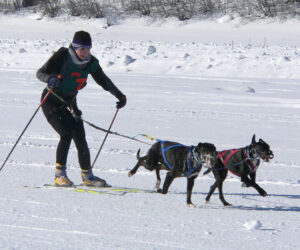
A cross-country skiing activity where your dog wears a special pulling harness attached to you via a bungee line. Your dog helps pull you forward as you ski, turning it into a team sport. For senior dogs, you can keep the pace gentle and focus on enjoying the glide together rather than racing.
[source: Wikipedia]
A cross-country skiing activity where your dog wears a special pulling harness attached to you via a bungee line. Your dog helps pull you forward as you ski, turning it into a team sport. For senior dogs, you can keep the pace gentle and focus on enjoying the glide together rather than racing.
Canicross
 [source: Mondou’s “Outdoor sports to enjoy with your dog this winter” article]
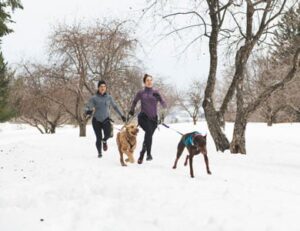
Essentially running with your dog, but with a proper harness and hands-free waist belt. It’s a great winter option if the paths are packed and not too icy. For older pets, think of it as a light jog or brisk walk where they set the speed.
[source: Mondou’s “Outdoor sports to enjoy with your dog this winter” article]
Essentially running with your dog, but with a proper harness and hands-free waist belt. It’s a great winter option if the paths are packed and not too icy. For older pets, think of it as a light jog or brisk walk where they set the speed.
Bikejoring
 [source: Fat-bikejoring outing in the Eastern Townships article]
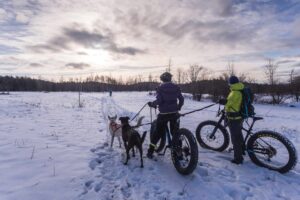
Like skijoring, but with a mountain bike instead of skis. Your dog runs ahead in a pulling harness, connected to the bike via a shock-absorbing line. Works best on safe, snow-packed trails. For seniors, keep distances short and speeds low.
And yes, cats can get in on the action, too! Some will happily travel in a secure backpack carrier with a little viewing bubble, watching the world go by like they’re on their royal tour. Pair that with a calm winter walk or even a visit to a pet-friendly cabin, and you’ve got yourself a feline-approved outing.
Quirky bonus idea? Ice fishing with your pet! Dogs will enjoy sniffing around the frozen lake (on leash, of course), while many cats are surprisingly fascinated by the tiny fish and the movement under the ice.
And don’t forget about winter travel in general. Road trips or train rides to snowy towns can be a great way to break the routine, as long as your companion gets plenty of rest stops and cozy downtime. Whether it’s high-energy sports or slow, sniff-filled adventures, the cold season is full of ways to keep tails wagging and whiskers twitching.
Winter sports can be a source of joy, mental stimulation, and improved mobility for older pets, as long as we adapt the activities to their abilities.
Remember:
[source: Fat-bikejoring outing in the Eastern Townships article]
Like skijoring, but with a mountain bike instead of skis. Your dog runs ahead in a pulling harness, connected to the bike via a shock-absorbing line. Works best on safe, snow-packed trails. For seniors, keep distances short and speeds low.
And yes, cats can get in on the action, too! Some will happily travel in a secure backpack carrier with a little viewing bubble, watching the world go by like they’re on their royal tour. Pair that with a calm winter walk or even a visit to a pet-friendly cabin, and you’ve got yourself a feline-approved outing.
Quirky bonus idea? Ice fishing with your pet! Dogs will enjoy sniffing around the frozen lake (on leash, of course), while many cats are surprisingly fascinated by the tiny fish and the movement under the ice.
And don’t forget about winter travel in general. Road trips or train rides to snowy towns can be a great way to break the routine, as long as your companion gets plenty of rest stops and cozy downtime. Whether it’s high-energy sports or slow, sniff-filled adventures, the cold season is full of ways to keep tails wagging and whiskers twitching.
Winter sports can be a source of joy, mental stimulation, and improved mobility for older pets, as long as we adapt the activities to their abilities.
Remember:
- Always work with your vet to design a plan tailored to your pet’s health.
- Prioritize safety and comfort over performance.
- The goal is movement, engagement, and connection, not exhaustion (for them or yourself!).