Understanding the needs of an aging pet in Winter – Snowy Paws Series
Understanding the needs of an aging pet in Winter
❄️ This article is part of the STARFLEET Petfleet Snowy Paws Series, a seasonal collection of tips and stories to help you and your pets stay active, comfortable, and connected through the colder months. Whether your companion loves the snow or prefers the blanket pile, there’s something here for every furry crewmate.
As the temperature drops and the days get shorter, our pets feel the change just as much as we do. For senior companions, winter can bring new challenges that affect mobility, comfort, and energy levels. Understanding how aging pet bodies respond to cold weather is the first step toward keeping them healthy, happy, and ready to enjoy the season with you.
Just like people, animals experience changes as they age, and winter weather can amplify some of those challenges.
Common physical changes in senior pets include:
- Joint stiffness from arthritis or general wear and tear.
- Muscle loss (sarcopenia) can affect stability and strength.
- Slower recovery from exertion, meaning they may tire more easily and need longer rest periods.
- Decreased heat regulation makes them more vulnerable to the cold.
How cold weather affects them:
Low temperatures can cause muscles to tighten and joints to stiffen, especially in pets with arthritis. Icy or slippery surfaces make it easier for them to lose footing or strain a muscle. This is why proper warm-ups before heading outside and gentle cool-downs afterward are essential for older pets. These small steps can help prevent soreness and keep them mobile throughout the season.
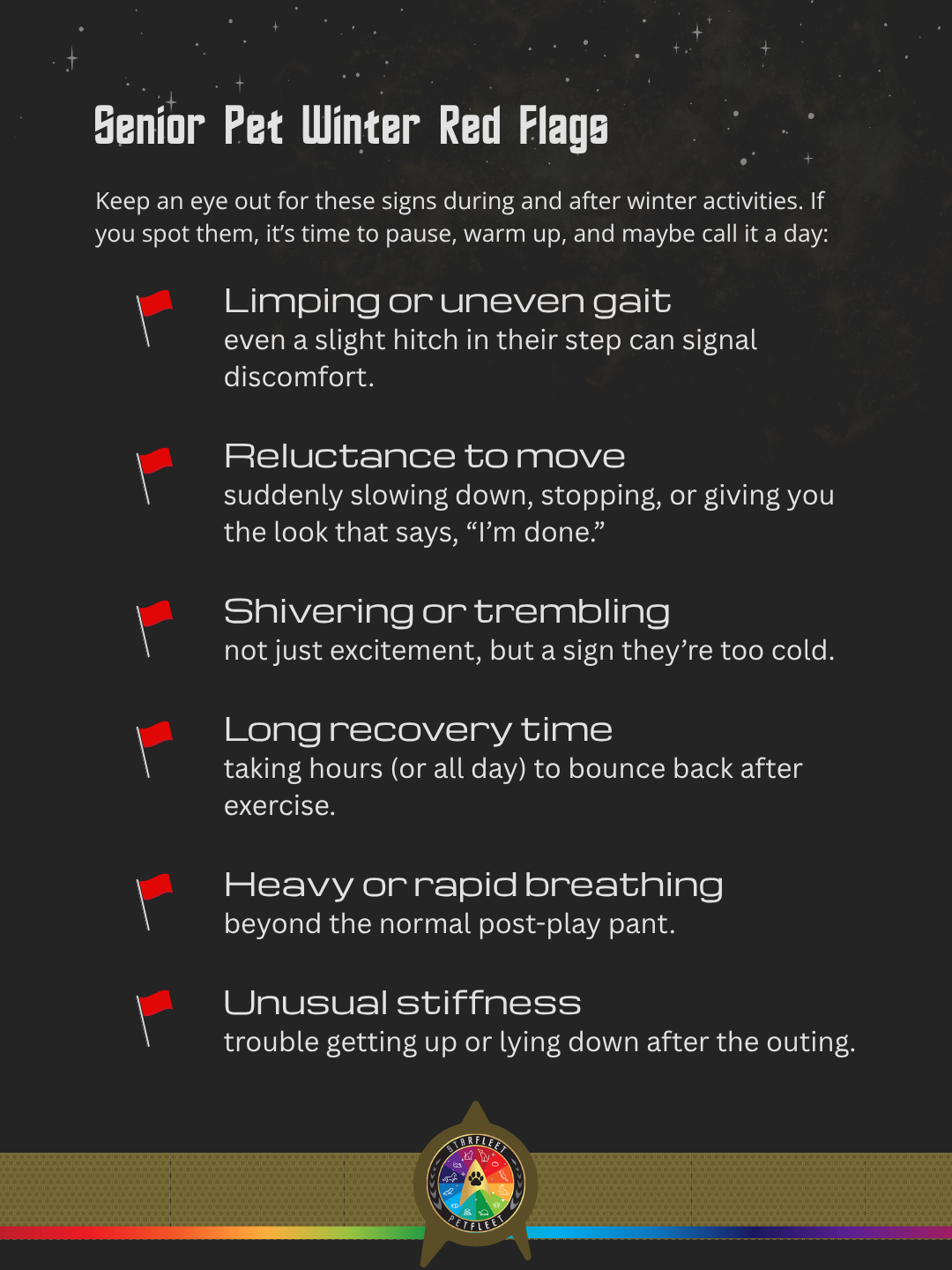
Signs of fatigue or discomfort to watch for:
- Limping or stiffness after activity.
- Reluctance to move or slowing down suddenly.
- Shivering or trembling (beyond just excitement).
- Taking longer than usual to recover after exercise.
If you notice one or more of these signs, it is time to take a break, warm up your pet, and possibly call it a day. Remember that every animal ages differently. Some will still be eager to romp through the snow, while others prefer a short walk followed by a nap by the fire. What matters most is listening to their signals and adjusting activities to suit their comfort level.
Here’s a practical list you can print:
In short, aging pets can absolutely enjoy winter adventures, but they need a bit more preparation and patience. By paying attention to their physical cues and taking simple preventive measures, you help them stay active and comfortable throughout the cold months. After all, winter memories are even sweeter when shared with the loyal companion who has walked beside you through every season of life.
Continue your mission in the Snowy Paws Series: Snow Much Fun: Winter Adventures for Senior Pets – Snowy Paws Series